Tulip Interfaces
Industrial technology with demanding buyers and complex content. How we turned dense technical material into publications people actually read.
CLIENT
Tulip Interfaces
SCOPE
Editorial & Sales
ENGAGEMENT
Ongoing – 12 months
When the product is complex and the audience is demanding, clarity is the only option.
Tulip Interfaces builds composable operations platforms for industrial manufacturers — technology that connects frontline workers, machines, and systems across production environments. The product is technically sophisticated. The buyers are engineers, operations directors, and C-suite executives who can tell immediately when the material in front of them doesn't understand what they do.
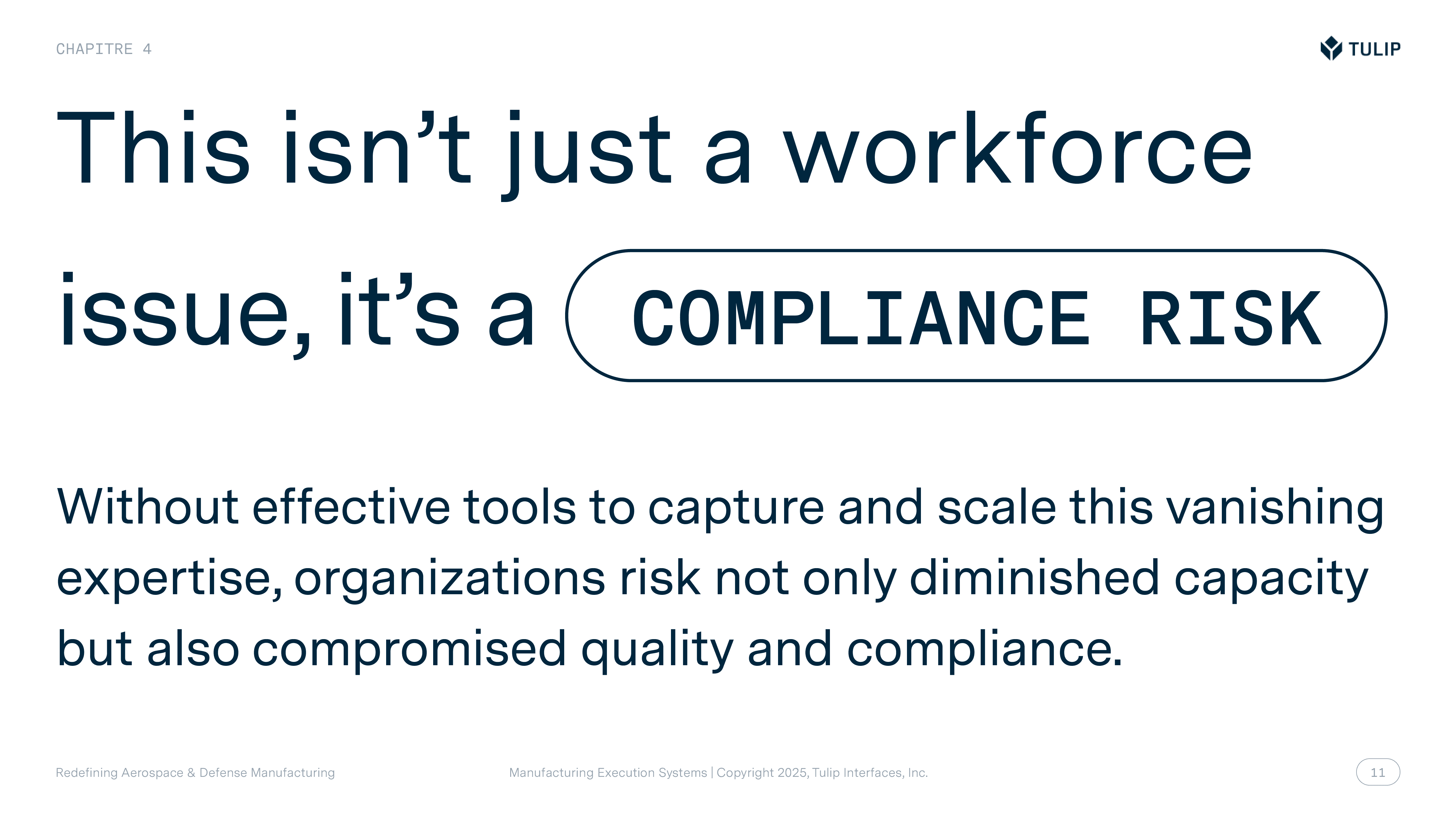

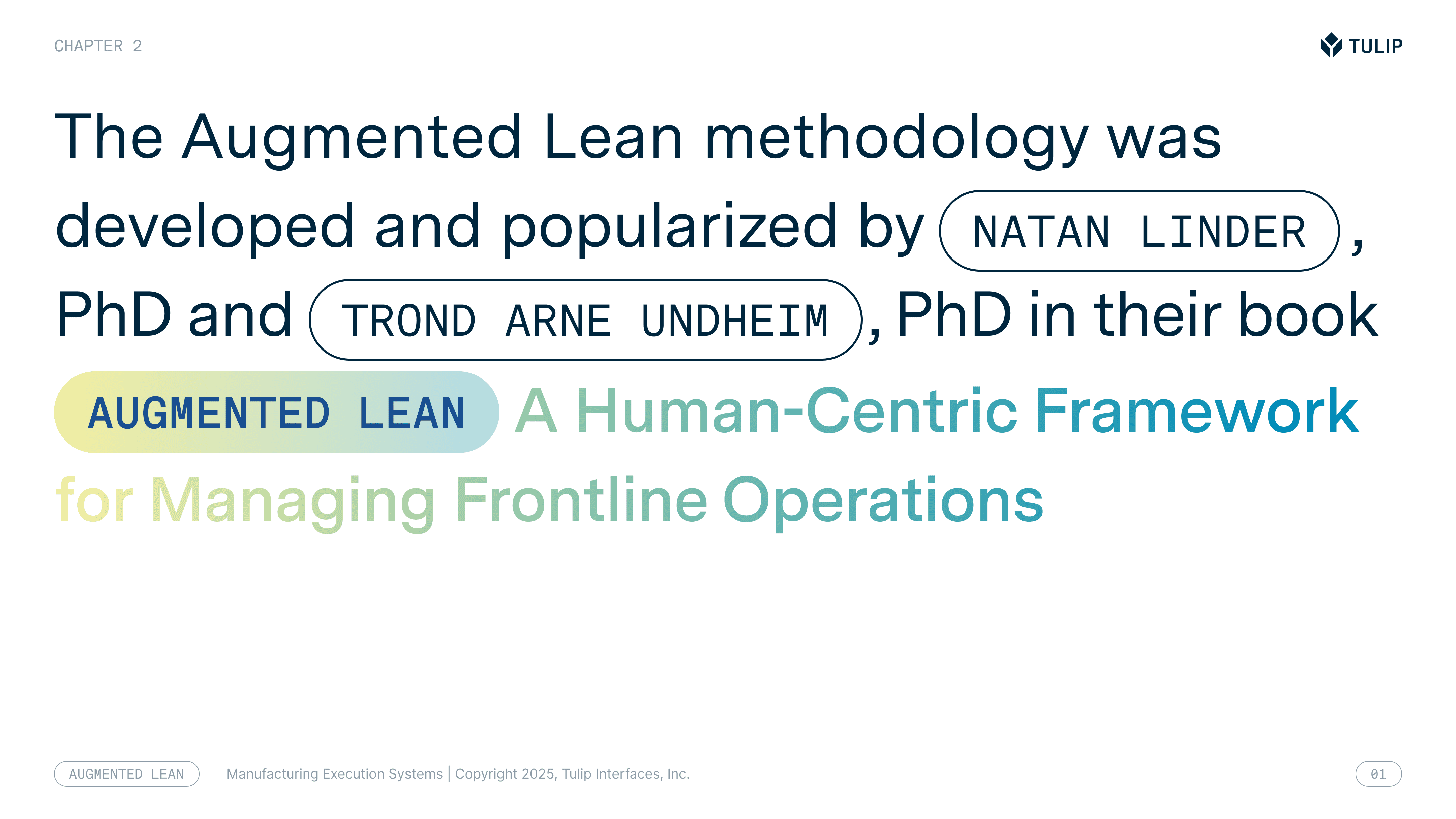
Our work with Tulip is focused almost entirely on editorial design and sales materials. The challenge isn't generating ideas — Tulip has deep expertise and a constant stream of content to communicate. The challenge is translating that expertise into publications that are visually structured, appropriately dense, and clear enough for a reader who encounters them mid-evaluation of a major operational decision.
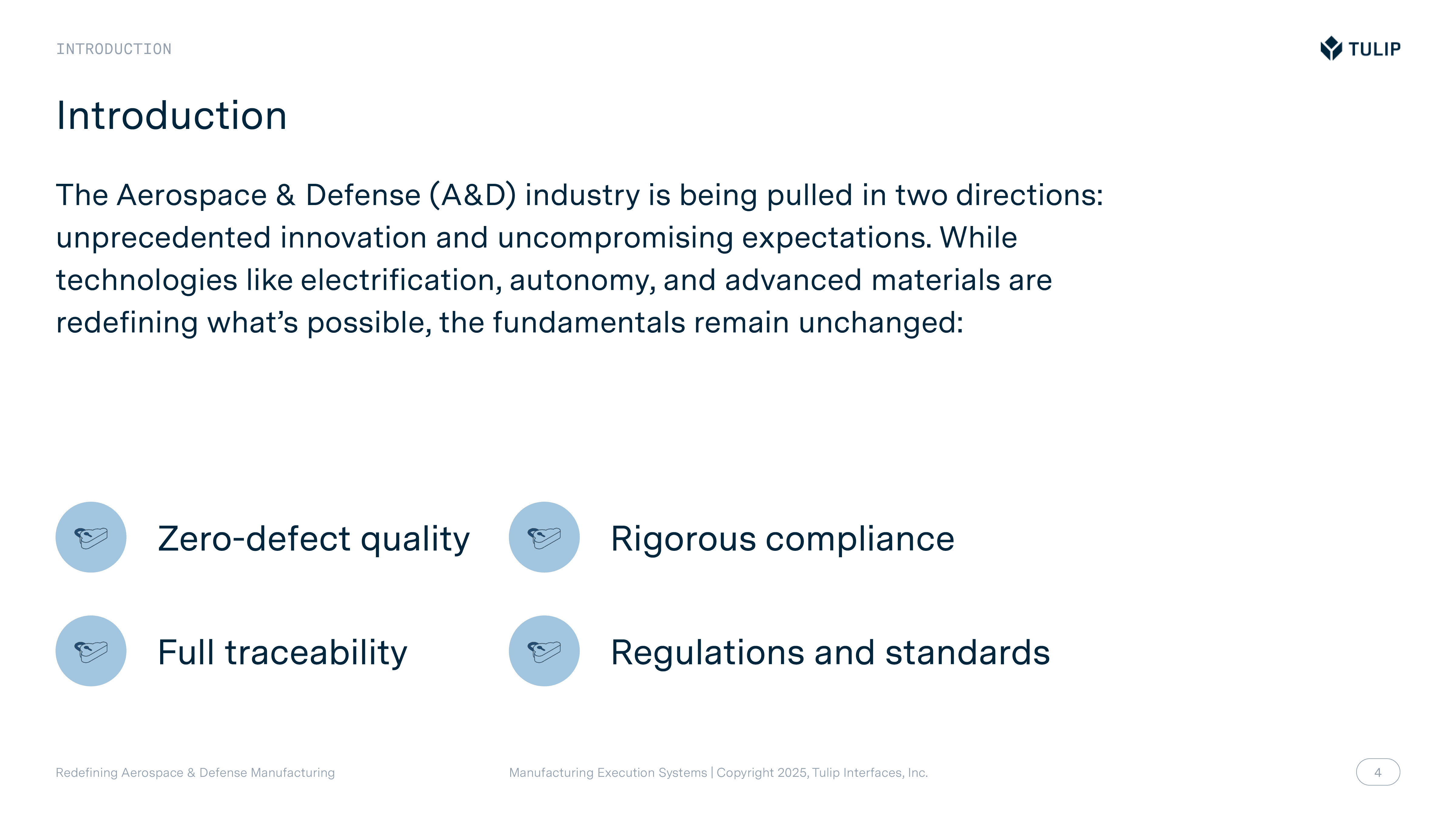
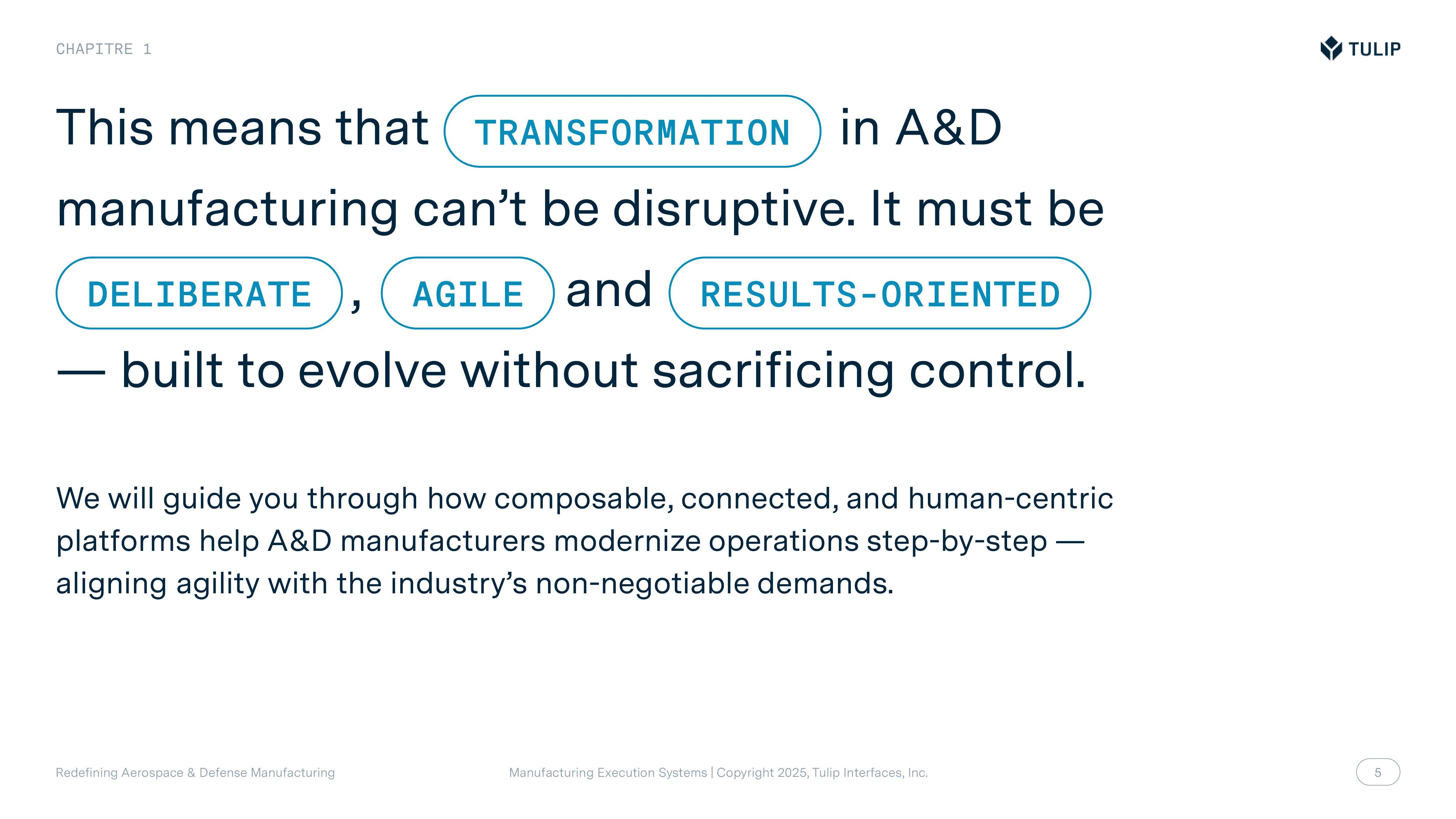
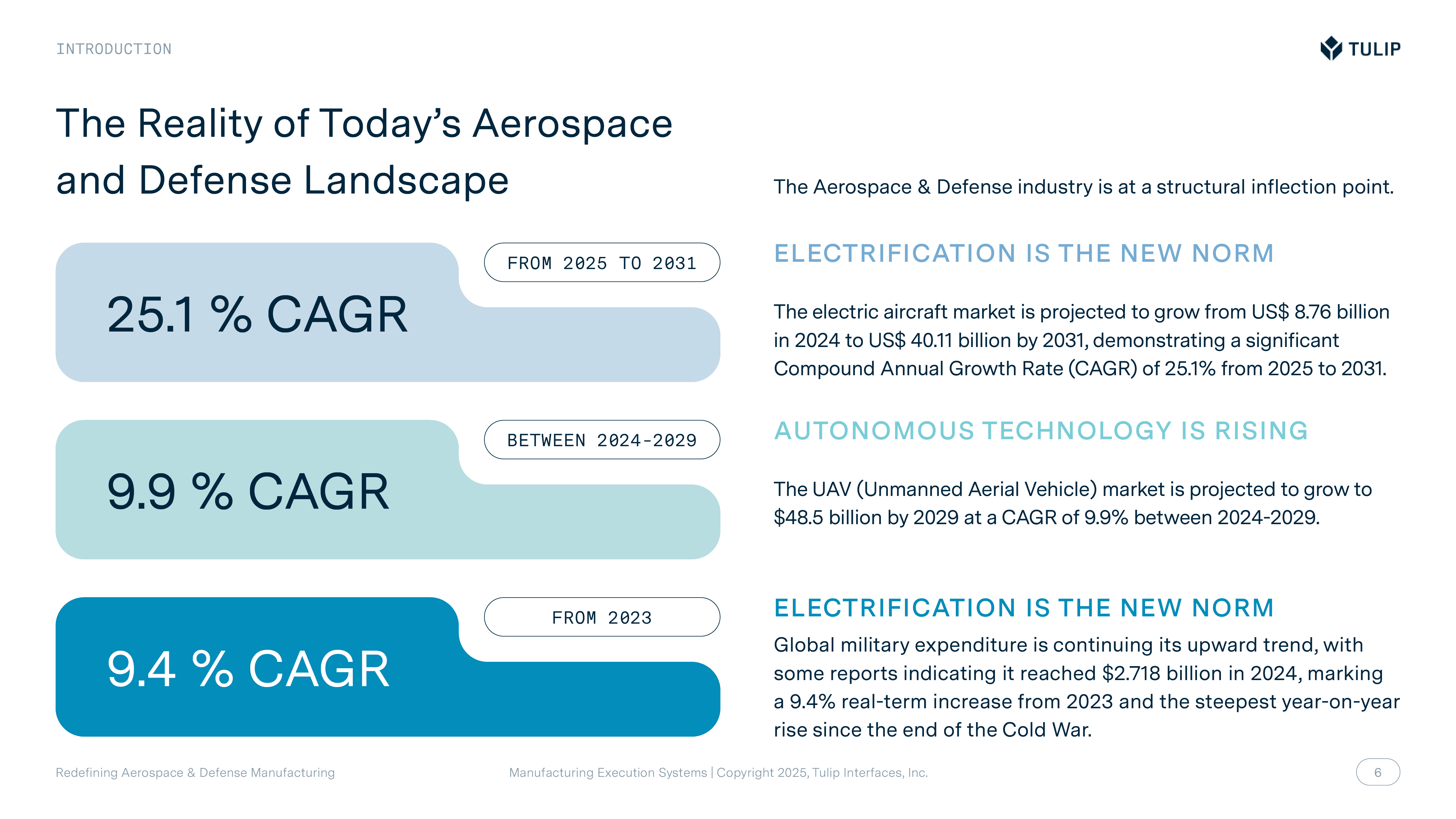
Dense doesn't have to mean unreadable. But it requires a system.
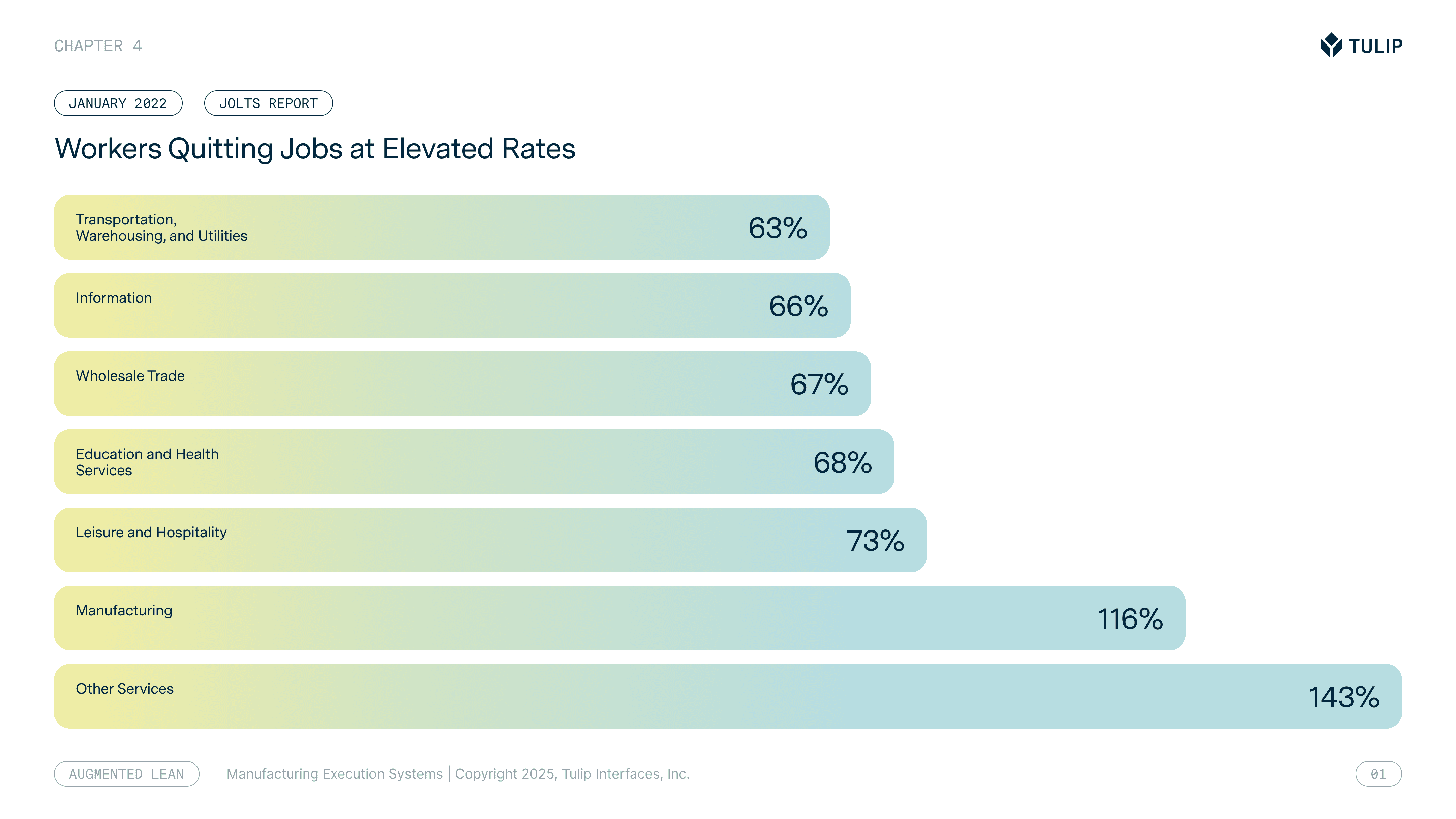
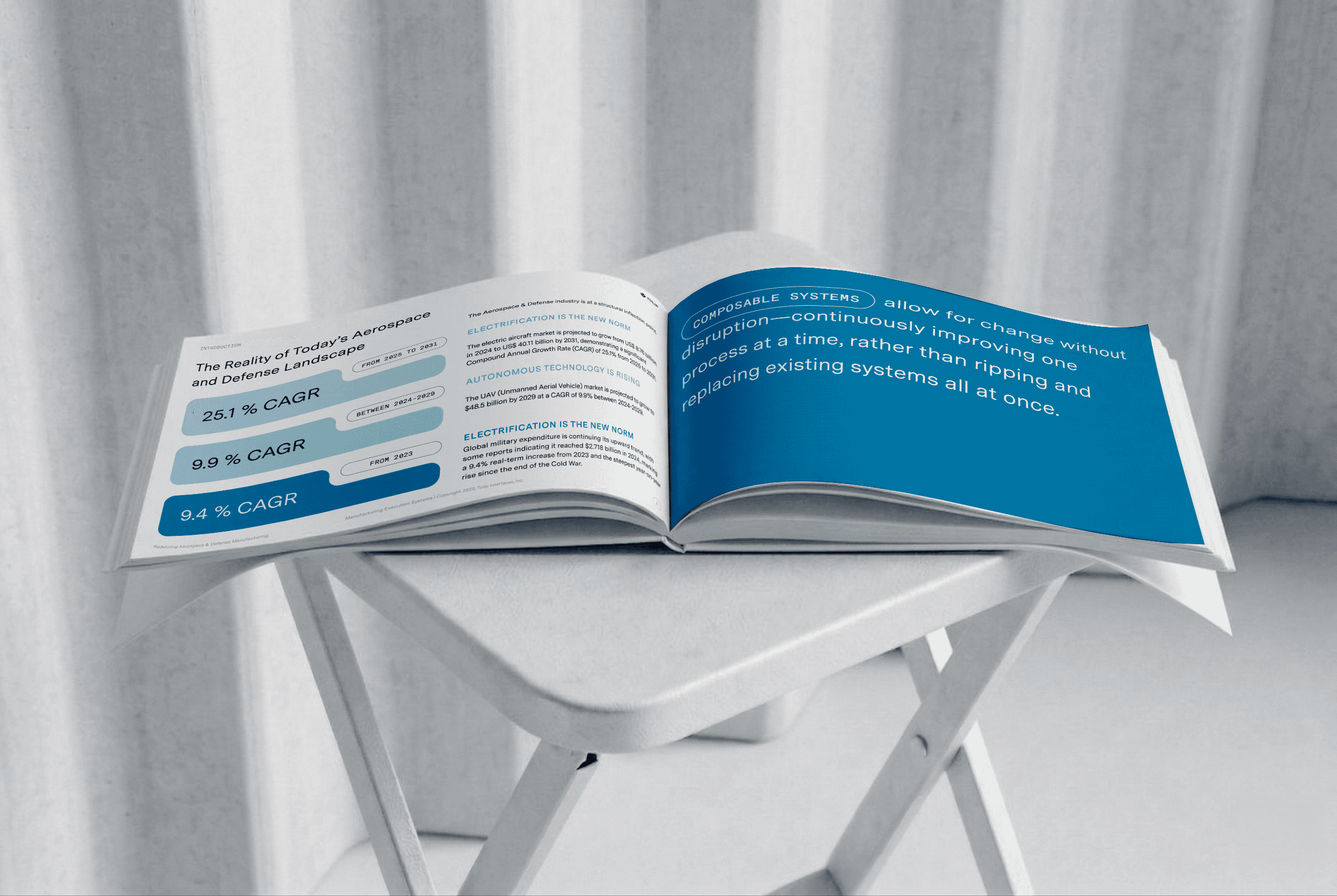
The material we receive is complex: technical whitepapers, comparative guides, methodology frameworks, industry-specific playbooks. Before we touched them, most of this content lived as slide decks with walls of text — paragraph after paragraph without visual structure, hierarchy, or rhythm. Our job is to take that content and rebuild it as a publication: one where the reader can navigate, where the argument has shape, where the data has a form that makes it readable without losing its precision.
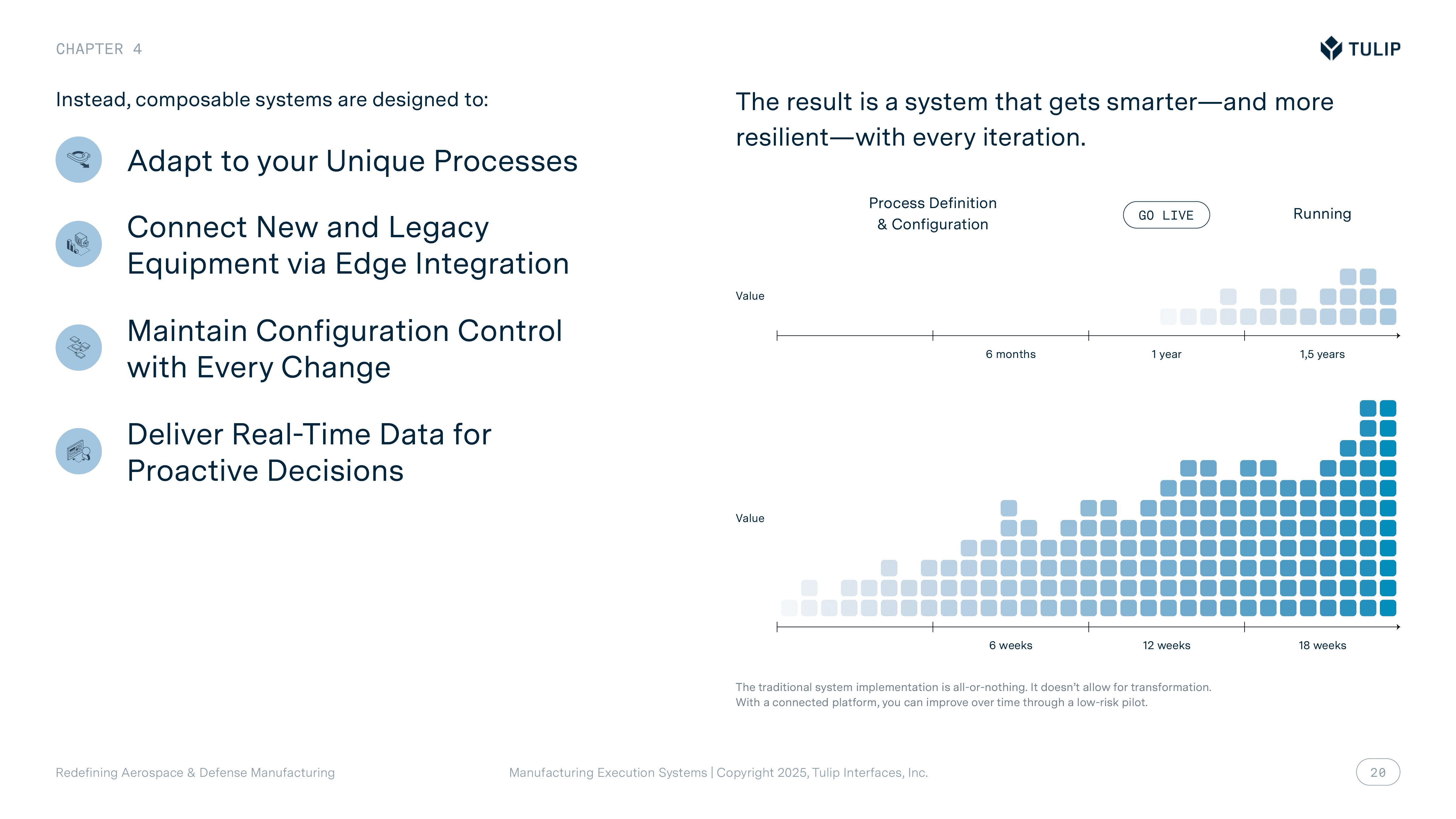
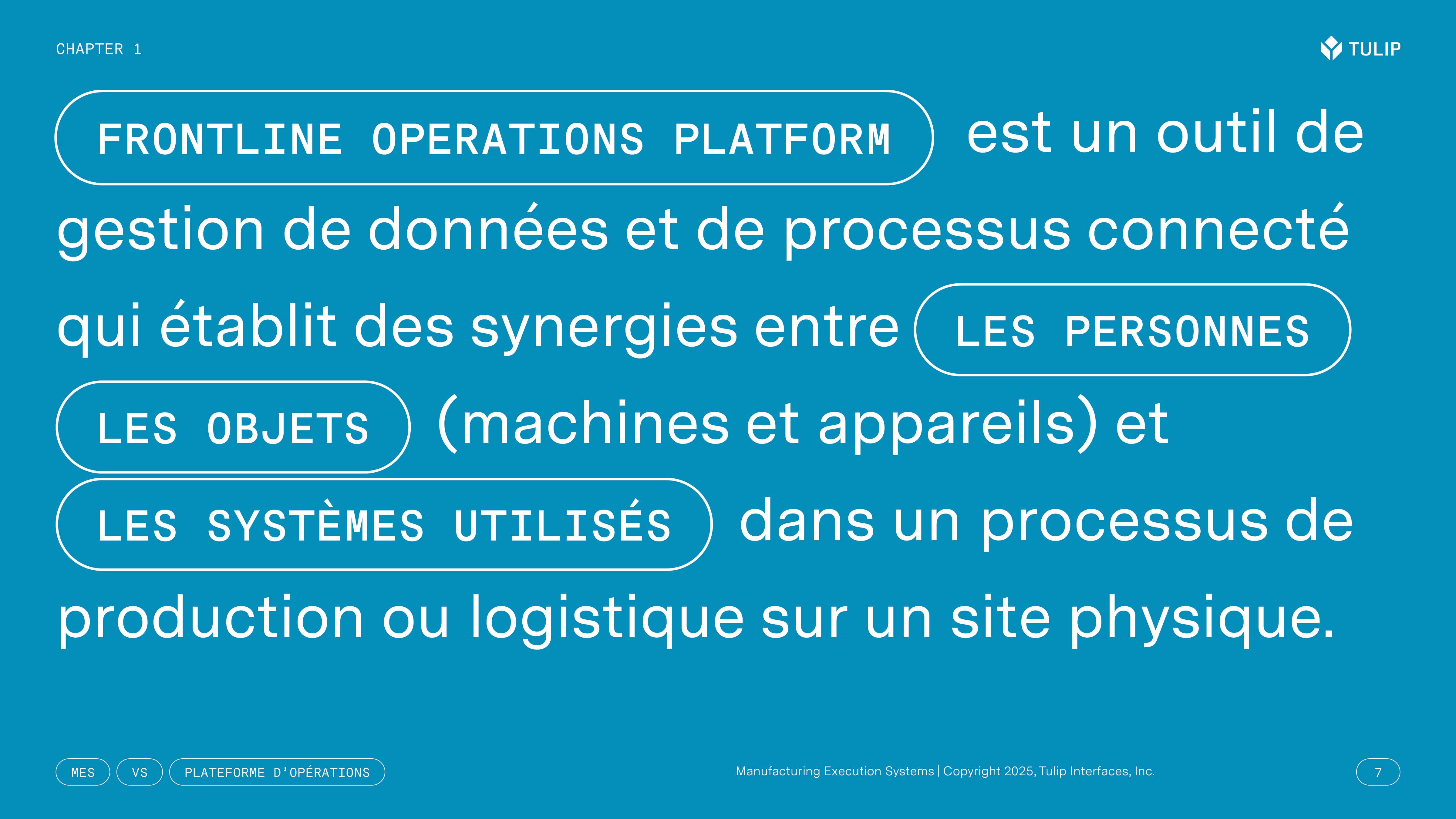
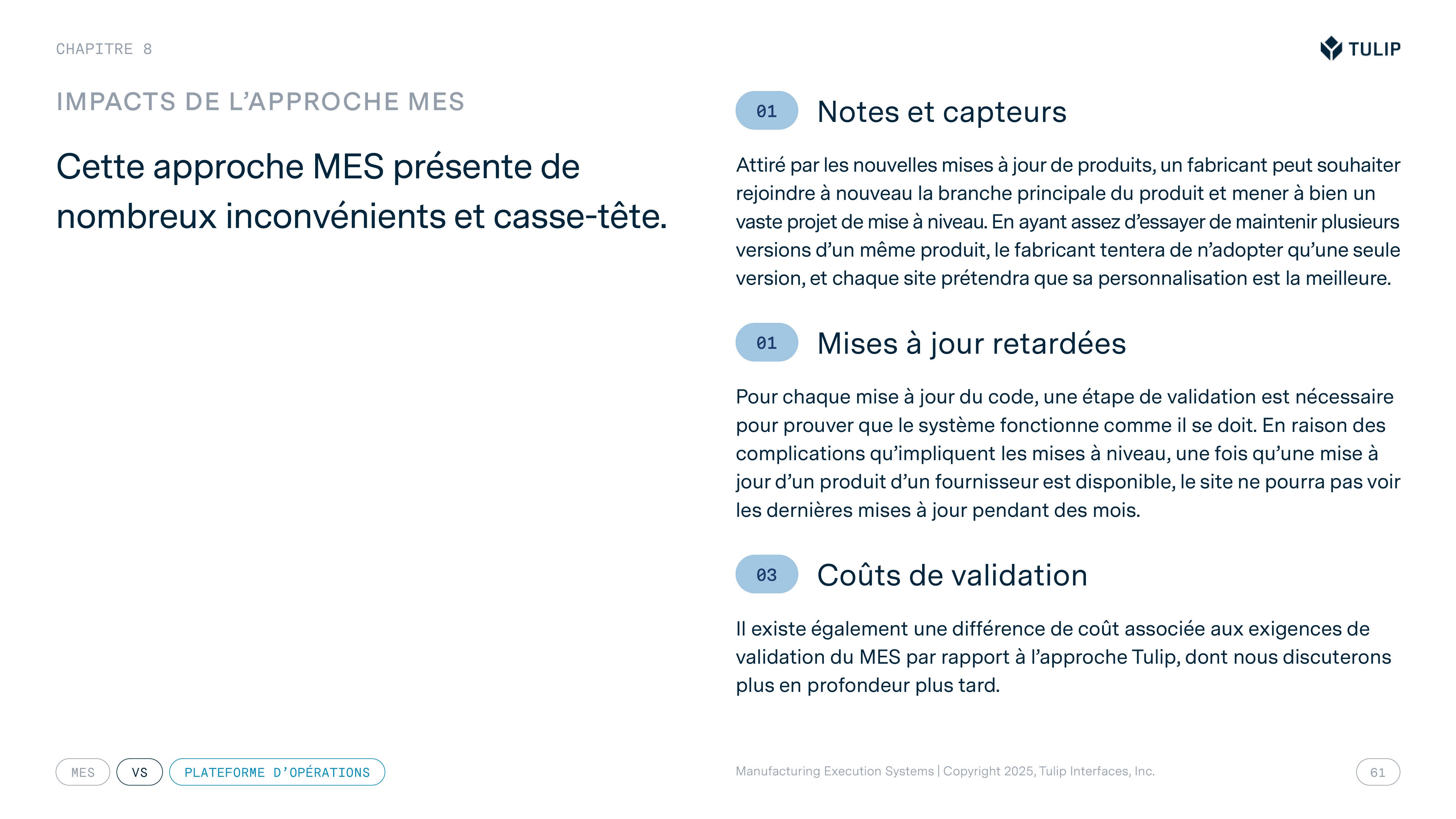
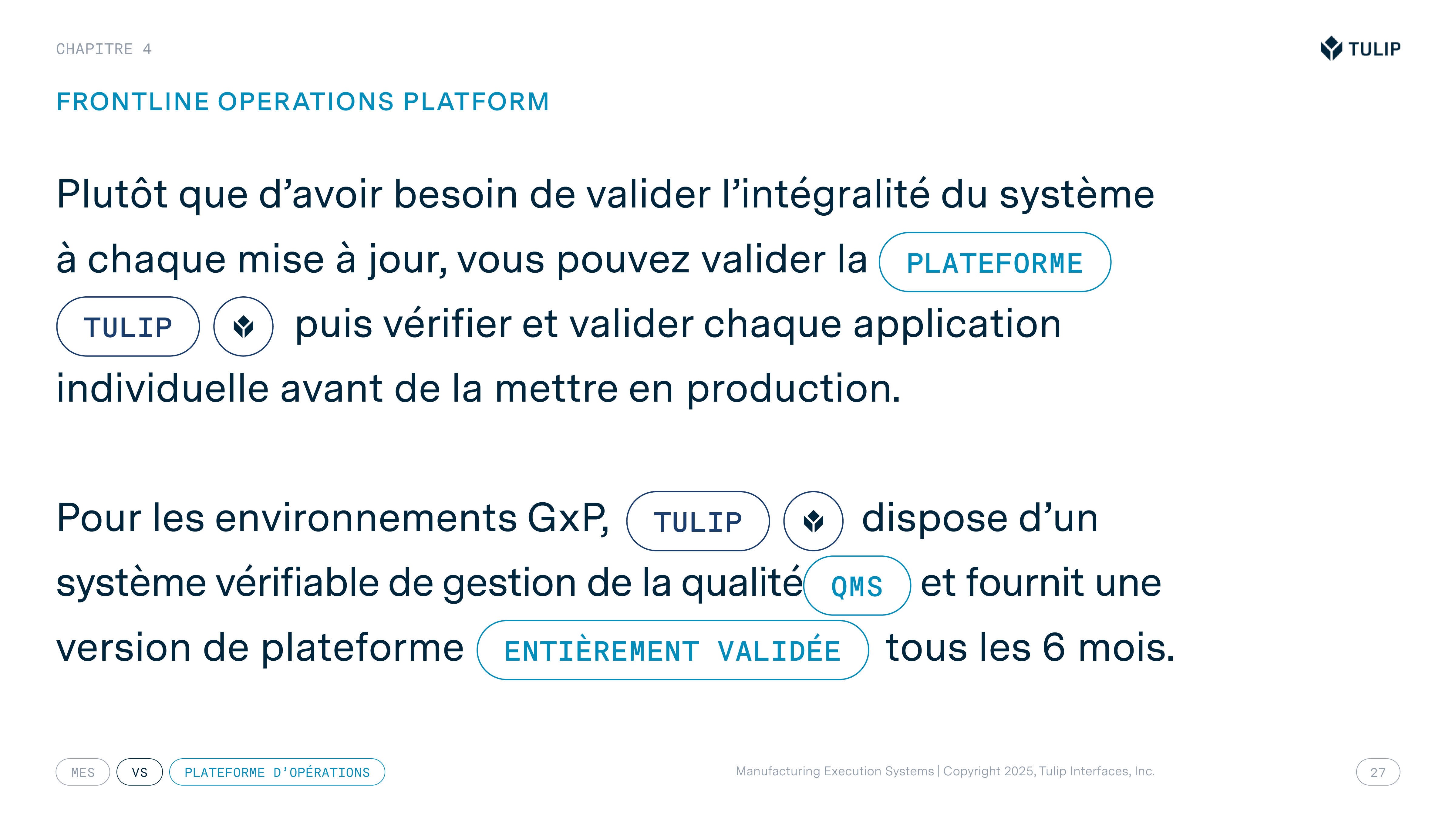
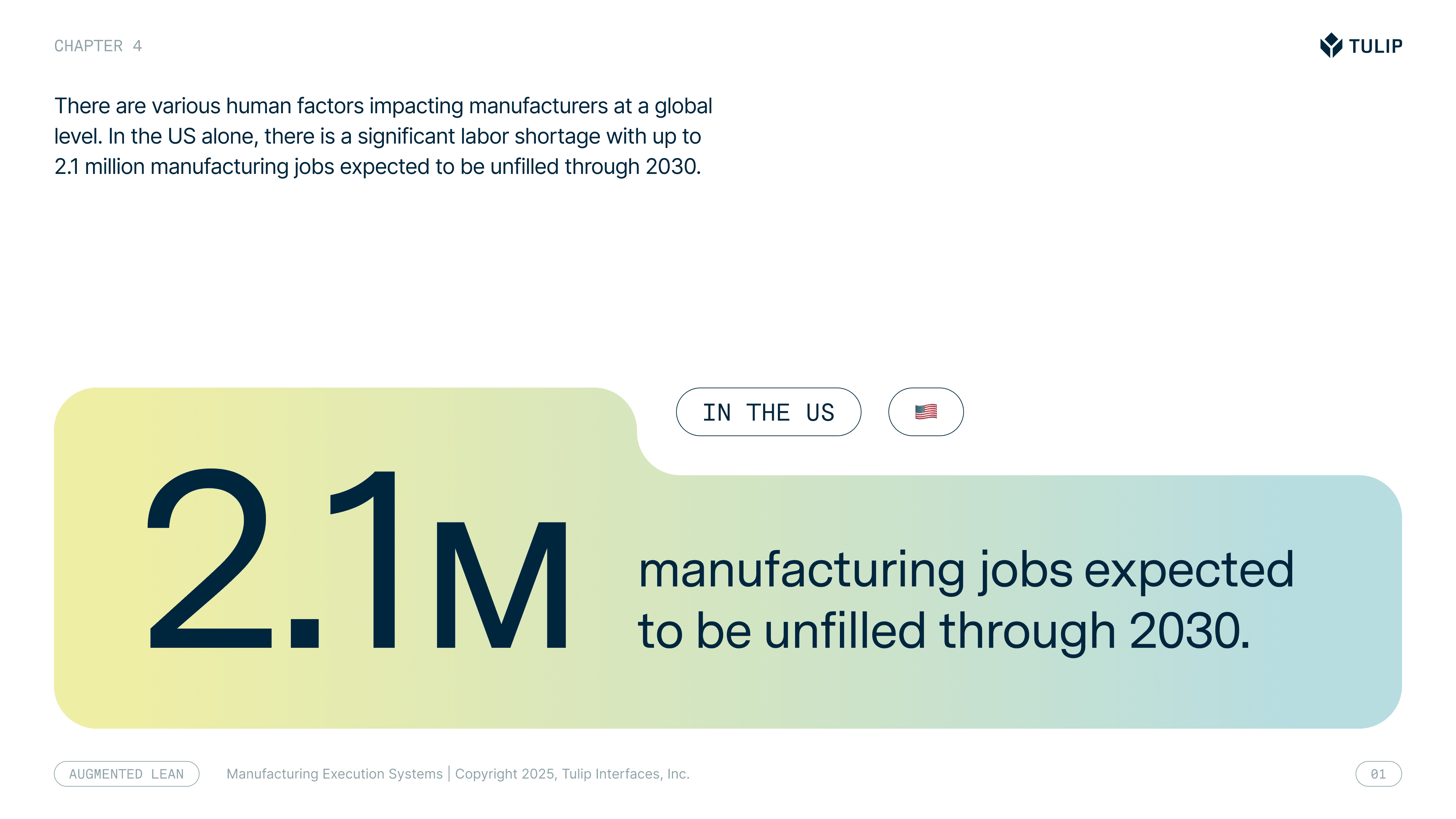
Each project involves deliberate decisions about information hierarchy, visual flow, and data representation. Product illustrations explain how the platform works without requiring a technical background. Infographics compress complex regulatory or operational comparisons into a single spread. Diagrams map processes that would otherwise take three paragraphs to describe. Every choice serves the same goal: a reader who understands more after reading than before, and who reads more than they expected to.
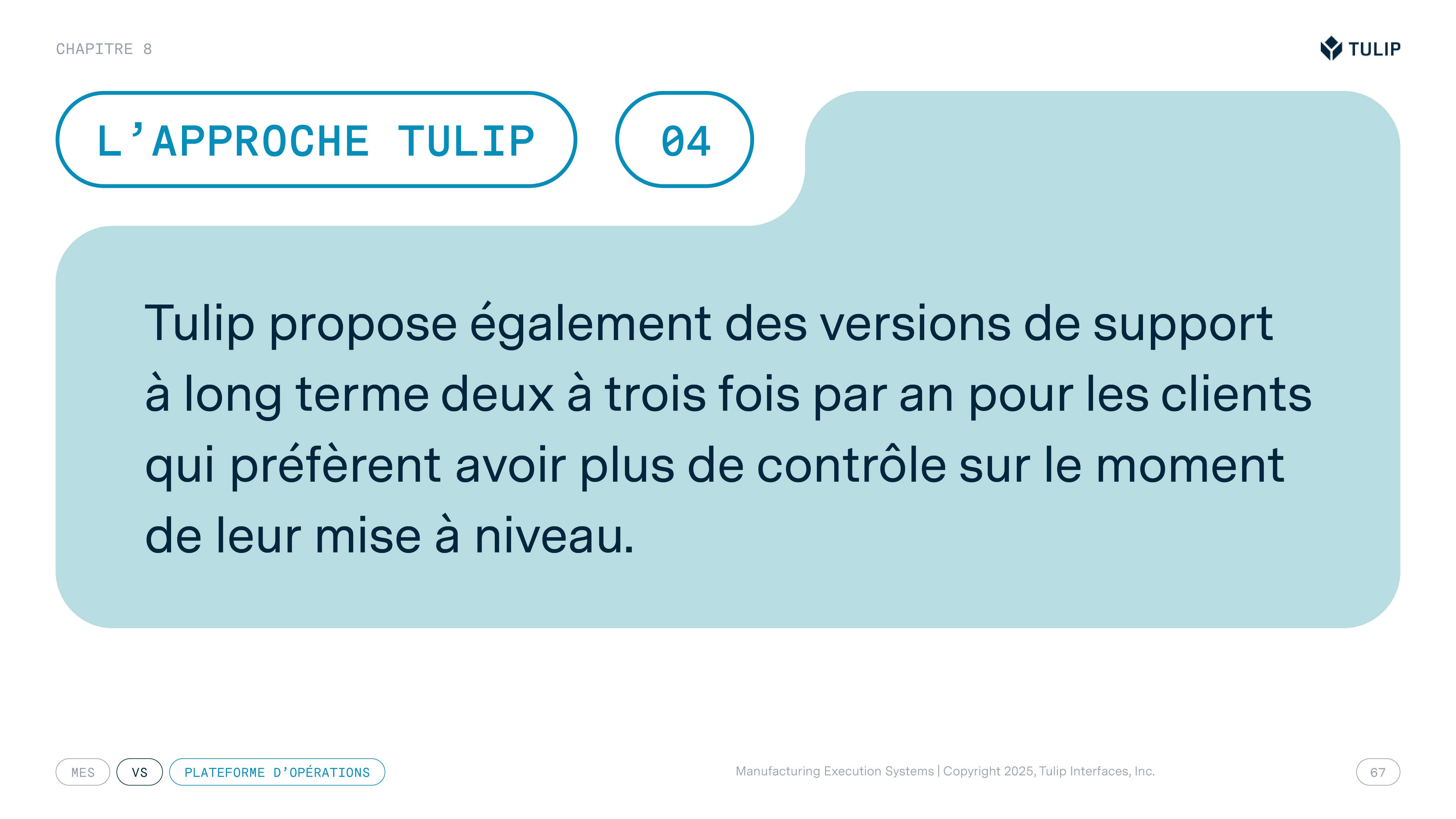

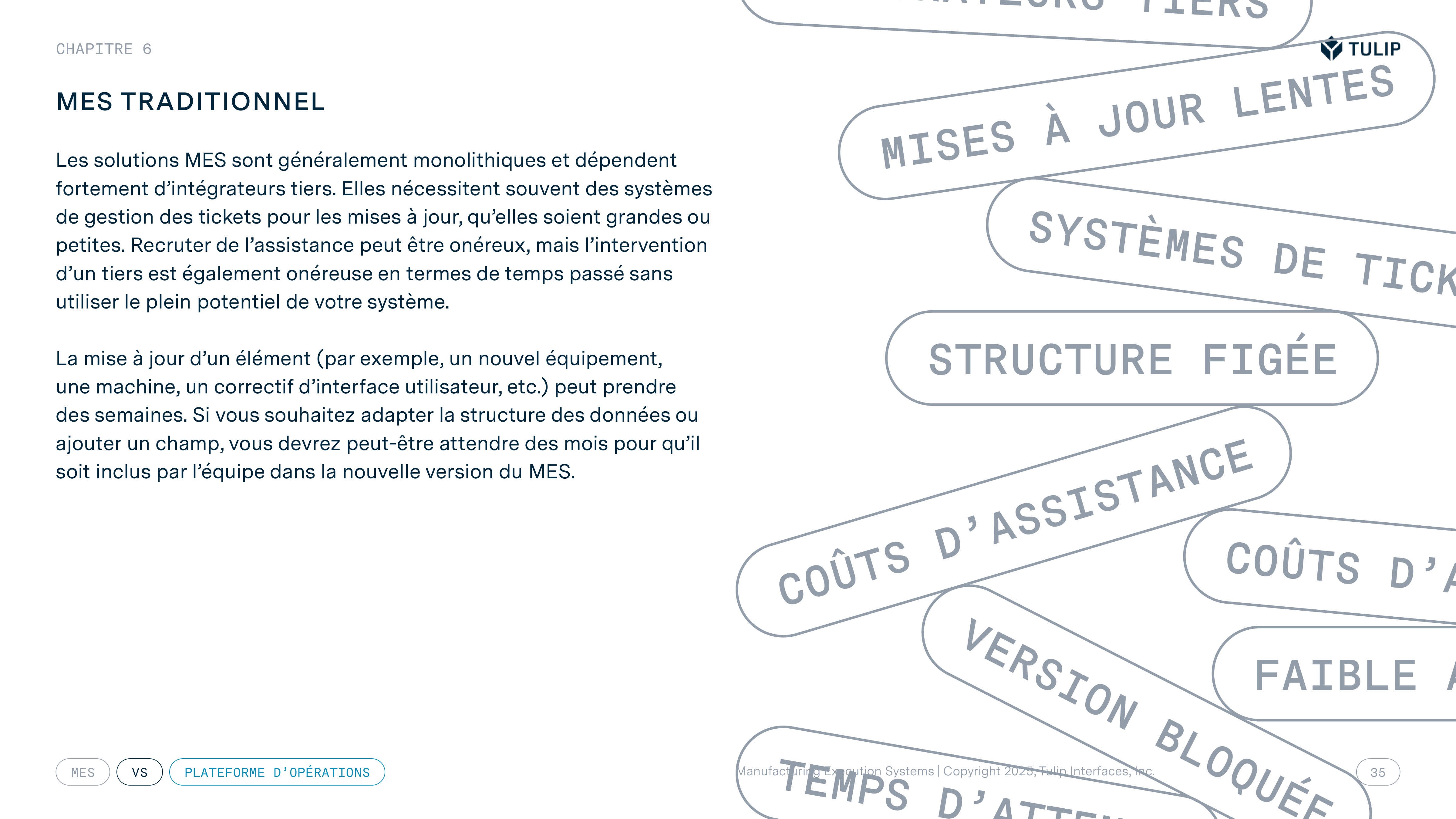
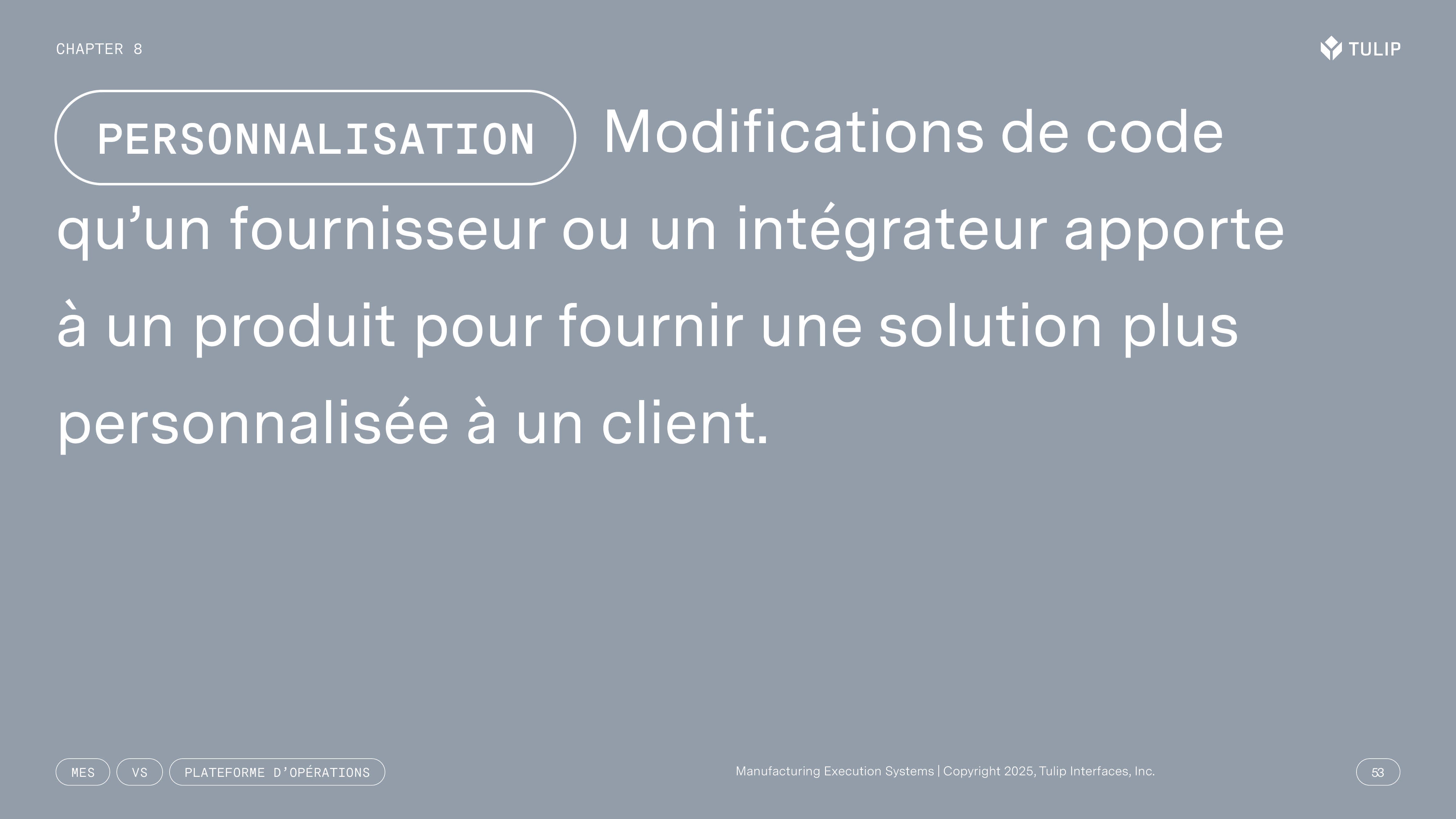
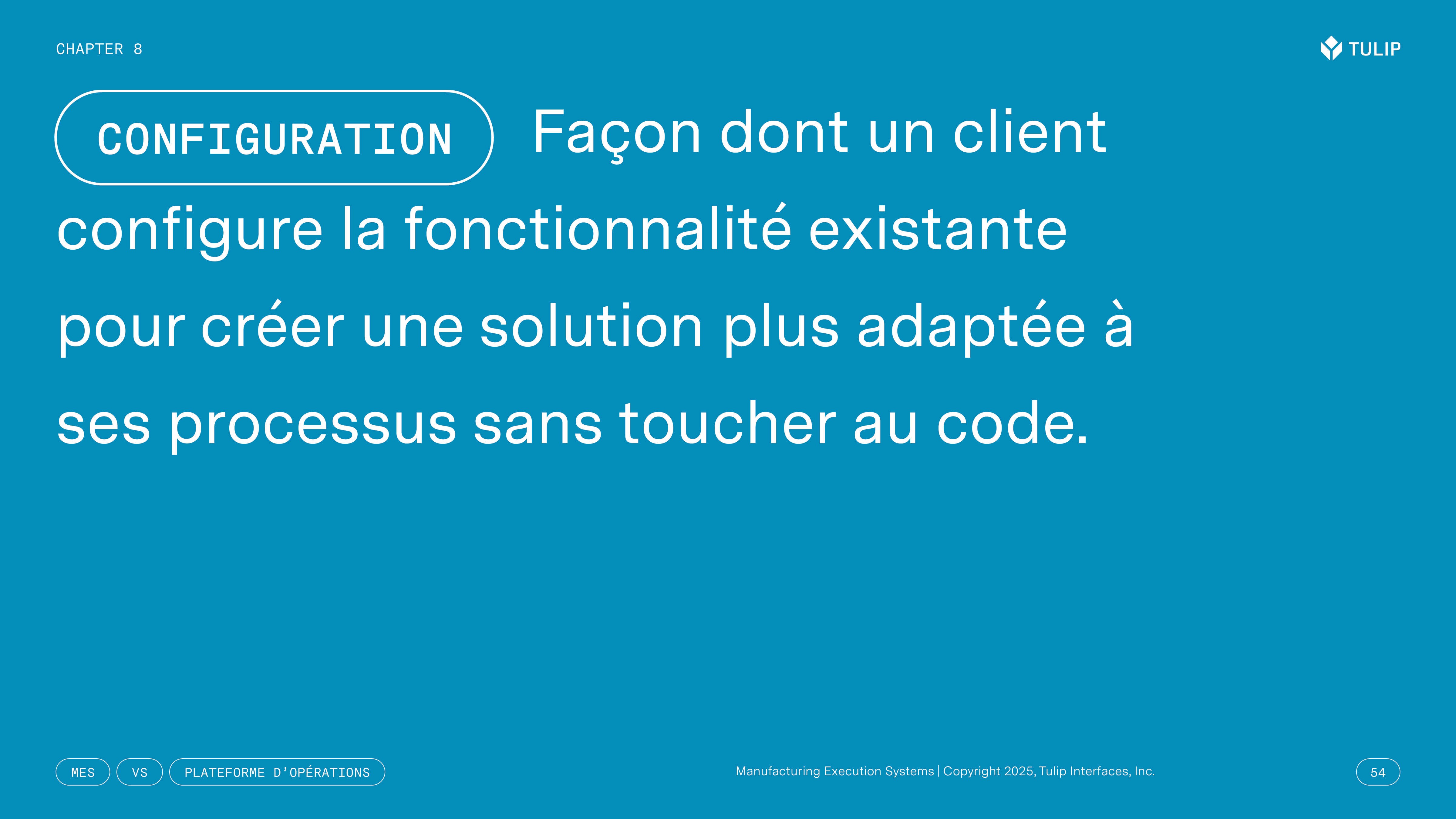
One ecosystem, many languages, many markets — and no room for inconsistency.
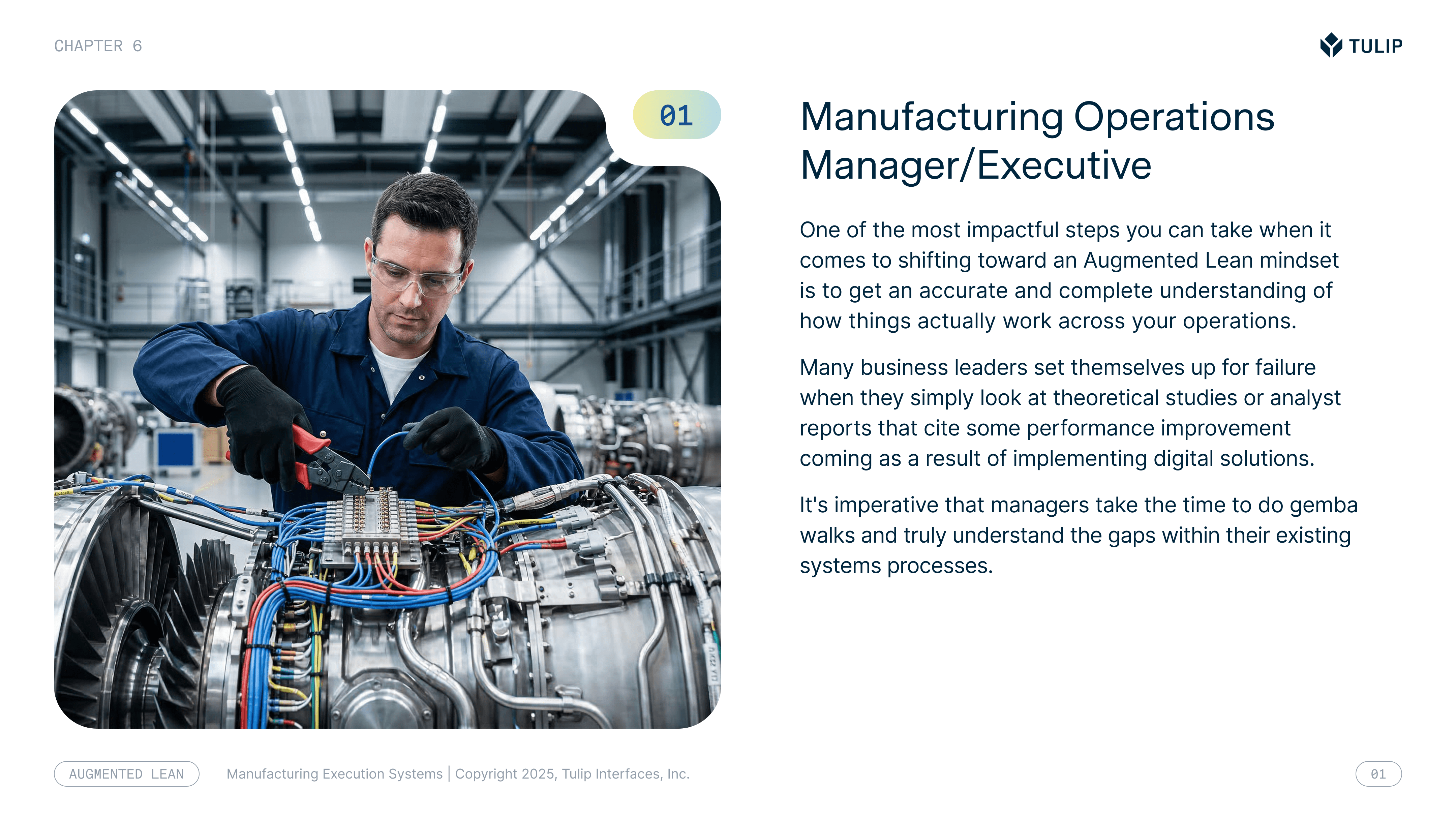
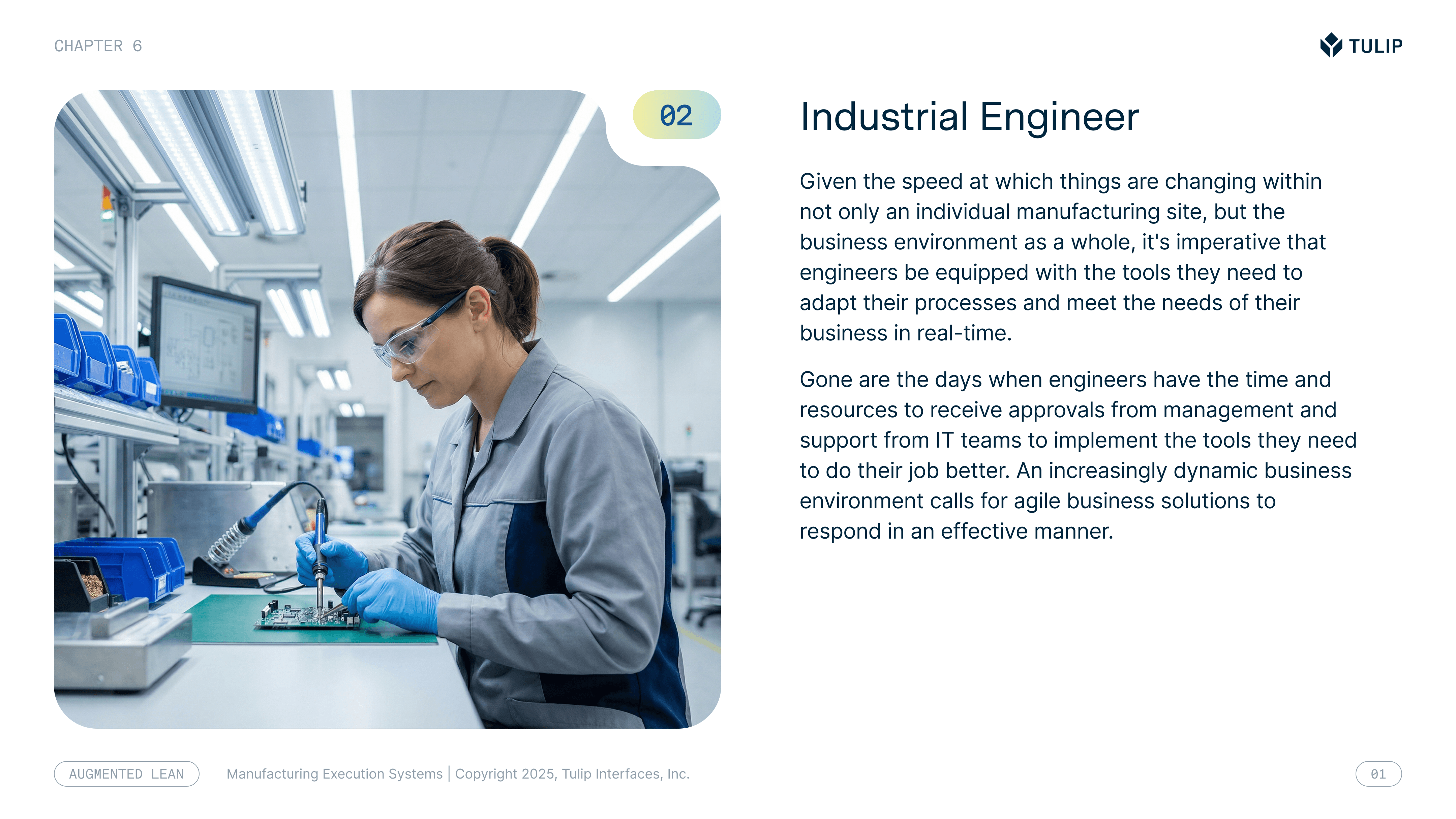
Tulip operates across an extensive range of industries — aerospace, automotive, biotech, pharmaceuticals, food and beverage, defense, electronics, luxury goods, and more — each with specific visual and communicative requirements. A significant portion of our output exists in multiple versions: adapted in length, localized in language, and calibrated for the conventions of each market.
For each industry and each market, we produce AI-generated imagery built to exact specifications: hyperrealistic visuals that reflect the particular environment, personnel, equipment, and operational context of each vertical. The standard of precision is exceptionally high. A pharmaceutical clean room looks nothing like an aerospace assembly floor, and the imagery has to be accurate enough that the people who work in those environments recognize them immediately. Consistency across a project — and across the full body of work — is non-negotiable.








Alongside the main Tulip brand, we work across its sub-brands — including Augmented Lean and the Groundbreakers Awards — each with its own visual identity that must feel distinct while remaining clearly part of the broader ecosystem. The brand guidelines are rigorous. The margin for visual interpretation is narrow. And yet every publication needs to feel considered and alive, not templated. That tension — between constraint and freshness, between technical precision and visual engagement — is what defines this work.